(What nobody tells you before you enter the plant gate)
When I was in pharmacy college, industrial pharmacist sounded like a big, clean, powerful word. Factory jobs. Helmets. ID cards. MNC logos. Fixed salary. A sense that you had “made it”.
Reality, as usual, was very different.
Nobody told us about sweating inside a helmet in peak May heat. Nobody talked about handling a bleeding contract worker at 3 a.m. when the doctor is 40 km away. Nobody explained how much of this job depends on judgment, not textbooks.
So if you’re reading this as a student or a young pharmacist, I’m not here to sell you a dream. I’m here to tell you what the ground actually looks like—so you can decide with open eyes.
Industrial pharmacy is not bad.
It’s not easy either.
But for the right person, it can become a strong, respectable, long-term career.
What “Industrial Pharmacist” Really Means in India
Let’s clear the confusion early.
In Indian industry, an industrial pharmacist is rarely sitting in a sterile lab or R&D wing. That’s a different track altogether.
Most of us work in:
- Manufacturing plants
- Mining and refinery units
- Power plants and smelters
- Large construction or infrastructure projects
- Corporate factories with Occupational Health Centres (OHCs)
Your role sits at the intersection of healthcare, safety, operations, and compliance.
Officially, you’re a pharmacist.
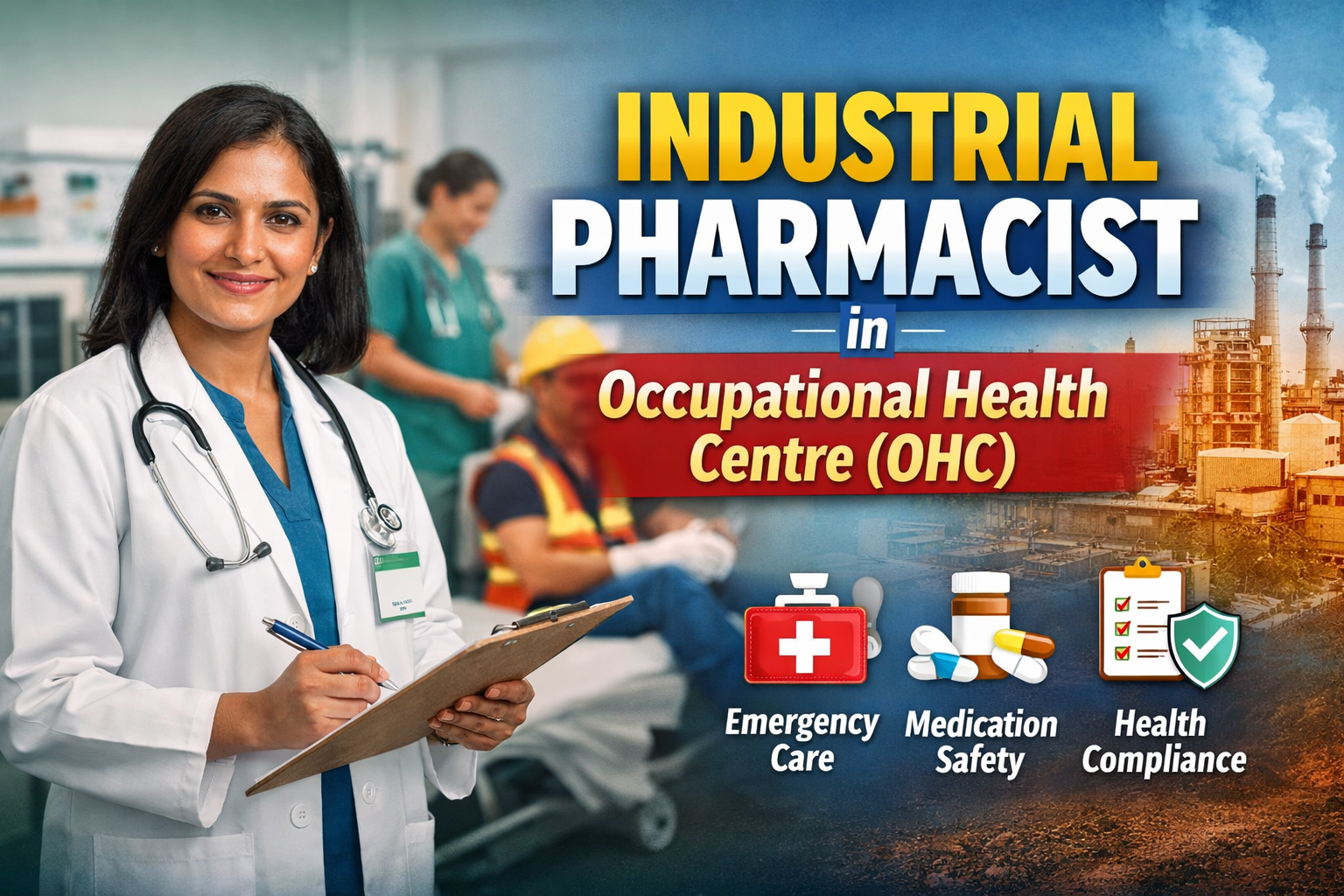
Practically, you’re the first medical point of contact, often before any doctor arrives.
And in many remote locations, you are the only healthcare professional on site.
How Most of Us Enter This Field (Not the Ideal Way)
Very few people I know planned industrial pharmacy from day one.
Most of us arrived here through:
- Retail pharmacy fatigue
- Hospital job burnout
- Referral from a senior
- Or simply because an opportunity came first
That was true for me as well.
What hit me hardest in the first few months was this:
there is no fixed routine.
No customer queue.
No predictable OPD flow.
No one telling you step-by-step what to do.
You’re expected to observe the plant, understand the people, sense risks, and act—sometimes before a problem becomes visible.
If you wait for instructions, the job feels confusing.
If you take responsibility, it slowly starts making sense.
A Realistic Look at the Daily Work
Let’s move away from theory.
A normal day in an industrial setup rarely looks “normal”.
Some days pass quietly.
Some days stretch your limits.
Your work usually includes:
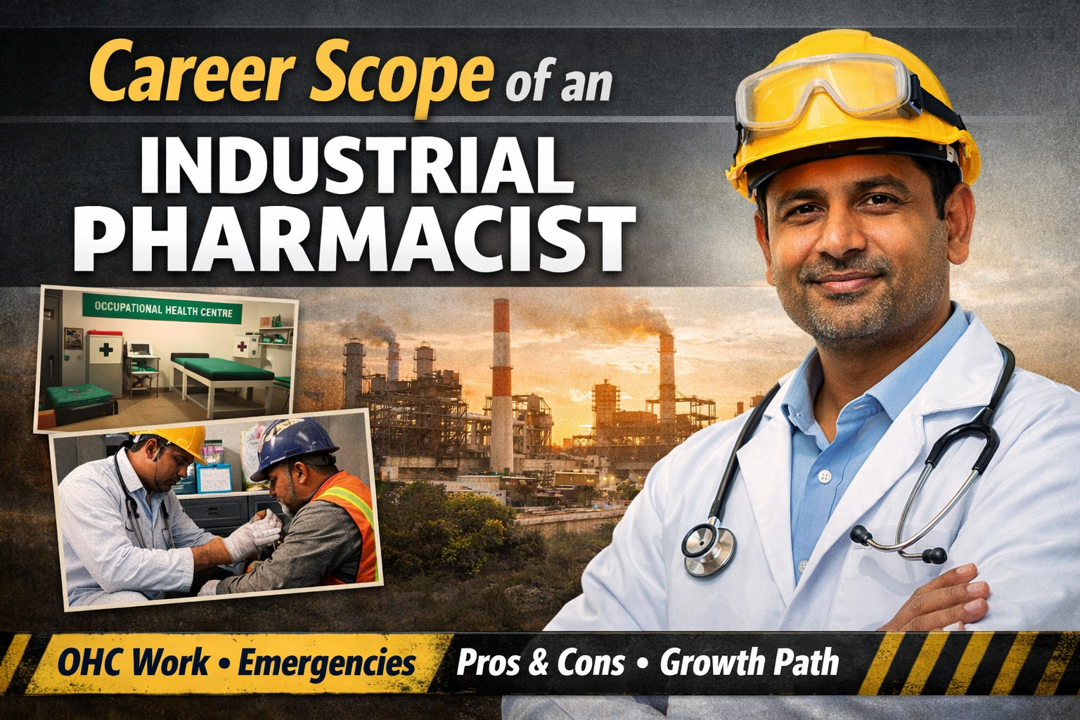
You open the OHC. Check emergency equipment. Go through stock. Ensure oxygen cylinders are fine. AED charged. Emergency drugs within expiry.
By mid-day, you may handle minor injuries—cuts, abrasions, eye irritation, muscle strain. Nothing dramatic, but attention to detail matters.
Then comes summer. Heat exhaustion cases increase. Workers feel dizzy. Blood pressure fluctuates. You start monitoring hydration more actively.
Sometimes a serious case hits. A fall from height. A chemical splash. Chest pain. Panic spreads fast. Those are moments where training meets temperament.
You stabilize. You decide. You coordinate. You document everything.
Between all this, there’s inventory control, record maintenance, audit preparation, doctor coordination, ambulance readiness, health check-up planning, and endless registers.
This job is not glamorous.
But it is real healthcare.
What Works in Your Favour (The Good Side)
Let’s acknowledge the positives honestly.
Stability Matters
Compared to retail pharmacy, industrial roles are far more stable. Salaries come on time. Workload is heavy, but predictable in a different way.
You’re not chasing daily sales targets or discounts.
Respect Comes With Responsibility
Inside a plant, when something goes wrong medically, people look at you first. That kind of responsibility brings respect—if you handle it well.
You Learn Beyond Pharmacy
You don’t just learn medicines. You learn:
- Emergency response
- Occupational hazards
- Documentation discipline
- Human behaviour under stress
- Coordination with multiple departments
These skills stay with you for life.
Long-Term Career Possibility
This field allows steady growth. Not flashy jumps, but solid progress—especially if you keep learning.
The Side Nobody Advertises (Cons You Must Accept)
This part is important.
Location Reality
Many industrial units are not in cities. They’re in industrial belts, rural zones, or mining areas.
If you need constant urban comfort, this can become mentally exhausting.
Time Has No Boundaries
Emergencies don’t respect office hours.
You may get calls at night. On Sundays. On festivals.
You are part of operations, not a clinic schedule.
Clinical Exposure Is Limited
If you dream of ICU-level pharmacotherapy or advanced clinical pharmacy, this may feel restrictive.
Your strength here is first aid and occupational health, not tertiary care medicine.
You Must Earn Your Value
Some organisations still don’t fully understand the pharmacist’s role. You’ll need to prove your relevance through competence and consistency.
Skills That Actually Decide Your Growth
Degrees open doors. Skills keep you inside.
Calm Communication
You will deal with workers from different educational and cultural backgrounds. Explaining health issues simply is a skill—not everyone has it.
Emergency Confidence
Reading first aid and performing it are different things. Confidence comes from practice and exposure.
Documentation Discipline
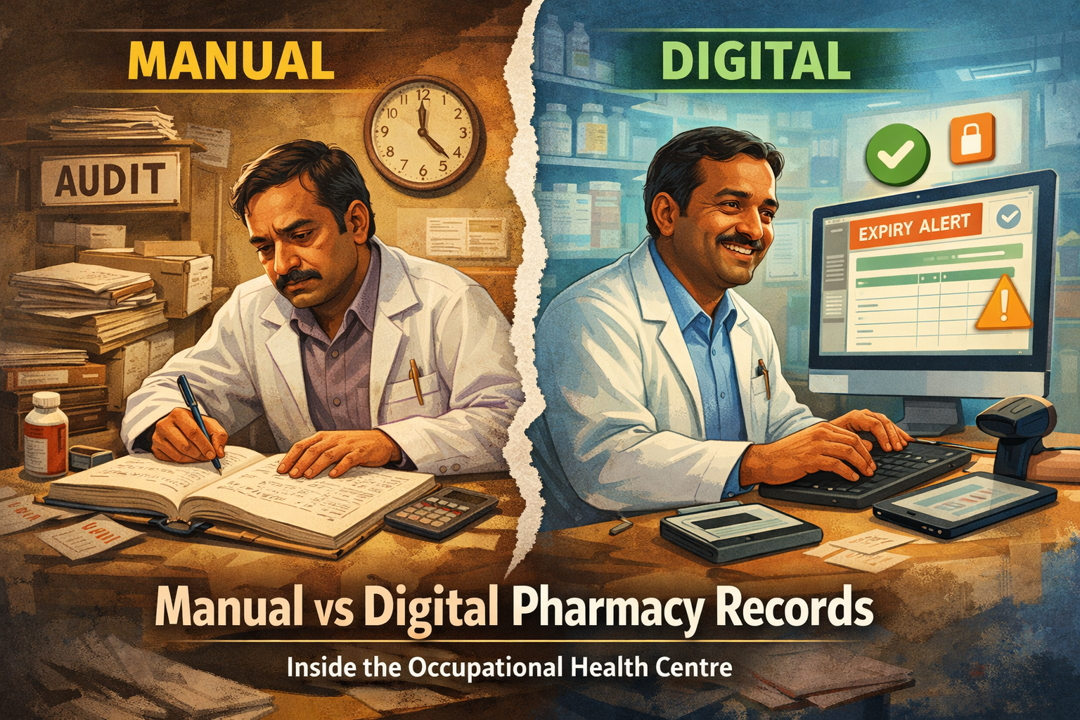
In industry, if it’s not documented, it didn’t happen. Audits don’t care about intentions.
Coordination Skills
You work with safety officers, HR, doctors, contractors, ambulance drivers. Ego clashes ruin efficiency.
Observation
The best pharmacists notice early signs—fatigue, dehydration, repeated complaints—before incidents happen.
Career Growth: What It Looks Like on Ground
Growth here is slow but steady.
Early Years
You learn the system. You make mistakes. You observe seniors. Your main job is learning without arrogance.
Middle Phase
You start handling audits, planning inventory budgets, coordinating health programs. This phase defines whether you grow or stagnate.
Senior Level
Leadership roles appear—cluster management, health administration, policy-level responsibilities.
At this stage, your value comes from experience, not just designation.
Mistakes I Made (And You Can Avoid)
I’ve made plenty.
I once underestimated documentation—paid for it during audits.
I once ignored safety collaboration—learned the hard way.
I once stayed too comfortable in a role—lost momentum.
The biggest mistake?
Thinking experience alone is enough without updating skills.
The Indian Context You Cannot Ignore
Our workforce is diverse. Literacy levels vary. Contract labour dominates. Language barriers exist.
Ideal systems don’t always exist. You adapt with what’s available.
That adaptability is the real test of an industrial pharmacist in India.
Who This Career Is Actually For
This field suits people who:
- Like practical problem-solving
- Stay calm under pressure
- Value responsibility over spotlight
- Can work independently
- Are okay being behind the scenes
It may not suit those chasing fast money, instant recognition, or purely clinical environments.
Practical Advice for Students and Freshers
Spend your first year learning, not complaining.
Ask questions. Observe seniors. Volunteer during audits. Learn emergency protocols properly.
Respect workers—they teach you ground reality faster than books.
And don’t rush career decisions based on salary alone.
Closing Thoughts (From Experience, Not Theory)
Industrial pharmacy is not flashy.
You won’t get applause.
You won’t trend on social media.
But when someone walks back home safely because you handled a situation right—that stays with you.
This career quietly rewards discipline, patience, and responsibility.
If you walk in with humility and commitment, it can give you something rare today: professional stability with purpose.
And that, in the long run, matters more than job titles.