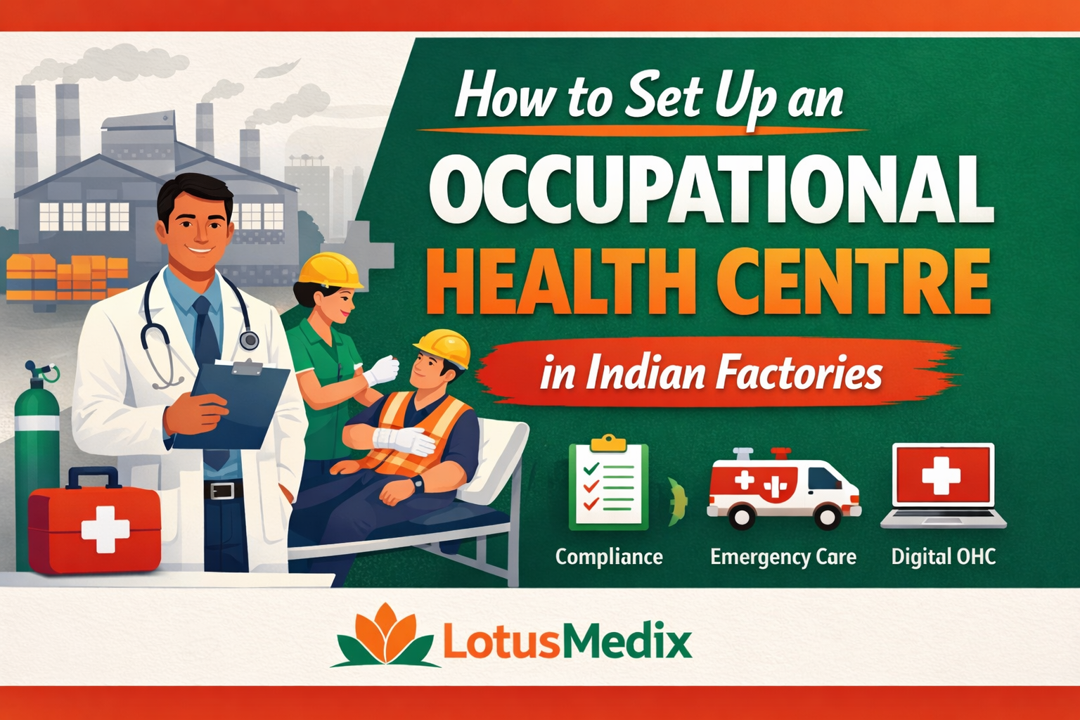
How to Set Up an Occupational Health Centre in Indian Factories
In today’s industrial environment, an Occupational Health Centre (OHC) is not just a legal requirement — it is a strategic investment in workforce safety, productivity, and compliance.
Across manufacturing plants, mines, logistics hubs, chemical factories, and large warehouses in India, a well-run OHC:
- Prevents workplace injuries
- Reduces absenteeism
- Improves audit scores
- Builds employee trust
- Protects management legally
As an Occupational Health expert working with Indian factories, I’ve seen firsthand how poorly designed OHCs invite penalties, while well-structured centres become a company’s strongest compliance asset.
This comprehensive guide will help:
- Industrial Pharmacists
- Factory Medical Officers (FMOs)
- Safety Officers
- HR Managers & HRBPs
- Plant Heads
- OHC Auditors
set up a fully compliant, practical, and future-ready Occupational Health Centre in India.
Why Every Indian Factory Needs an Occupational Health Centre
Indian factories face daily risks:
- Heavy machinery accidents
- Chemical exposure
- Noise-induced hearing loss
- Heat stress
- Dust-related lung disease
- Ergonomic injuries
An OHC acts as the first line of medical defense.
Real Industry Example (India)
A metal fabrication plant in Odisha reduced:
📉 Lost Time Injuries by 42%
📉 Medical leave by 31%
after upgrading their OHC with:
- Trained nurse + pharmacist
- Emergency response SOPs
- Digital health records
Legal Framework Governing OHCs in India
Occupational Health Centres are governed and audited under guidance from:
- Ministry of Labour & Employment
- Directorate General Factory Advice Service & Labour Institutes
- Employees’ State Insurance Corporation
State Factory Inspectorates further define:
- Minimum OHC size
- Staffing norms
- Equipment standards
- Medical record keeping
Step 1: Choosing the Right OHC Location & Layout
Ideal OHC Layout Includes:
| Area | Purpose |
|---|---|
| Reception & Records | Worker registration |
| Examination Room | Doctor checkups |
| Treatment Room | First aid & minor procedures |
| Pharmacy Store | Medicines & supplies |
| Observation Bed | Emergency care |
| Wash Area | Hygiene |
Practical Tip:
👉 Keep OHC near production floor but away from high noise zones
Step 2: Mandatory Staffing for OHCs
Depending on workforce strength:
Minimum Recommended Team
- Factory Medical Officer (Full/Part-time)
- Occupational Health Nurse
- Industrial Pharmacist
- First Aid Attendants
Large Plants (500+ workers)
Add:
- Safety Officer coordination
- Visiting specialists (Pulmonologist, Orthopedist)
Step 3: Essential Equipment & Medical Supplies
Core Equipment Checklist
✅ Examination couch
✅ BP apparatus & thermometer
✅ Oxygen cylinder
✅ Emergency crash cart
✅ Stretcher & wheelchair
✅ Eye wash station
✅ Nebulizer
Pharmacy Essentials
- Pain relievers
- Burn ointments
- ORS
- Antiseptics
- PPE medical kits
- Emergency injections (as per doctor protocol)
Step 4: Mandatory OHC SOPs (Standard Operating Procedures)
Every compliant OHC should have documented SOPs:
Core SOP Categories
- Medical emergency response
- Accident & injury management
- Medicine storage & expiry tracking
- Health check-up scheduling
- Occupational disease reporting
- Waste disposal (bio-medical)
- Ambulance coordination
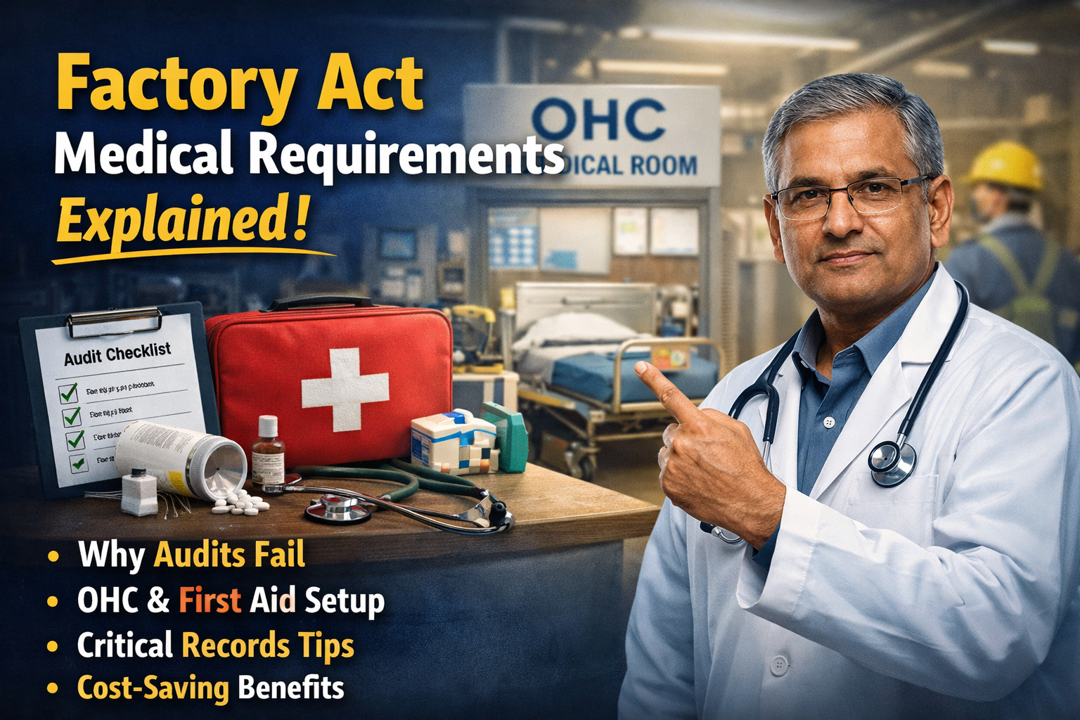
Real Compliance Insight
Factories without SOP documentation face:
⚠ Audit objections
⚠ Legal non-compliance
⚠ Insurance claim rejections
Step 5: Digital Transformation of OHC Operations
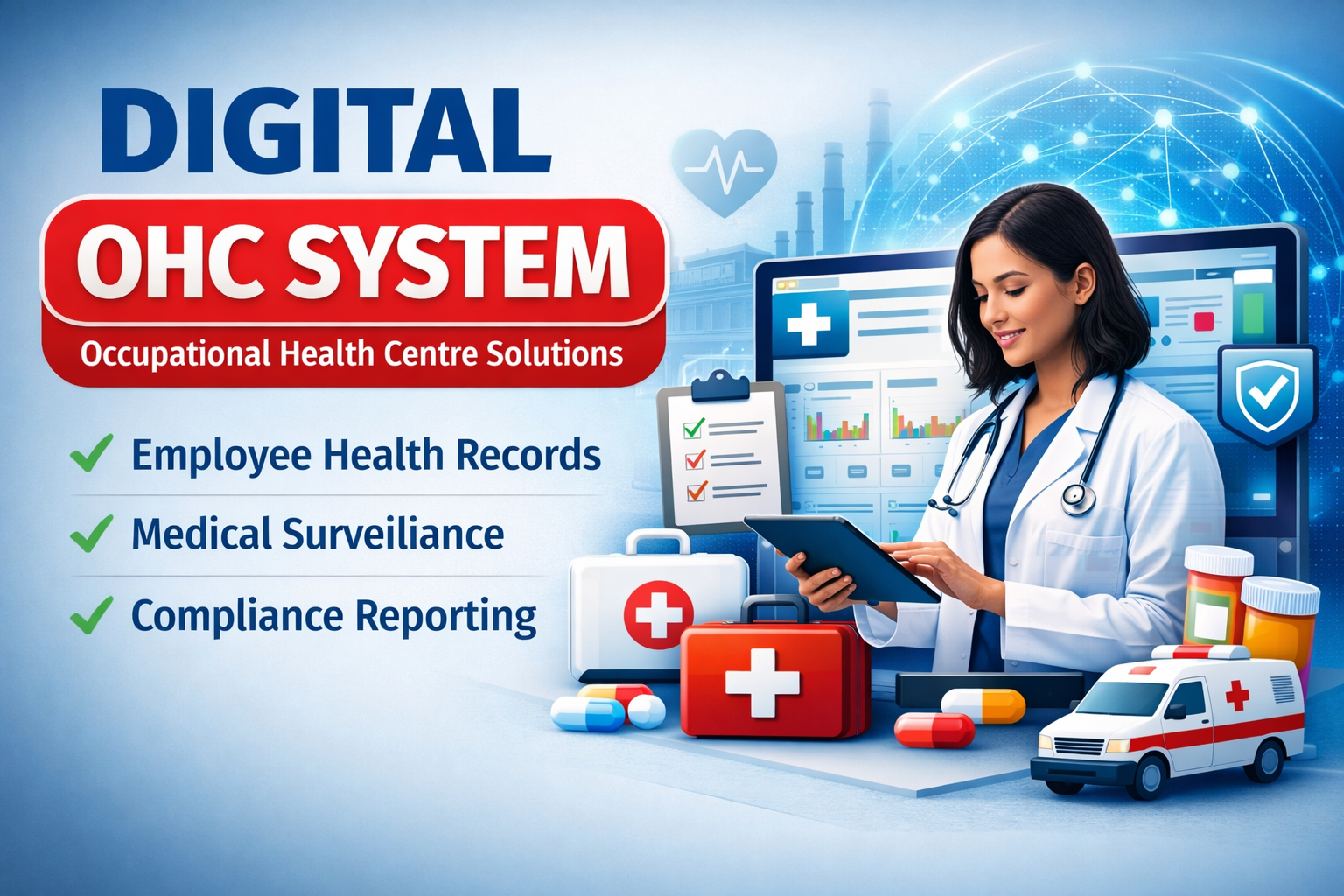
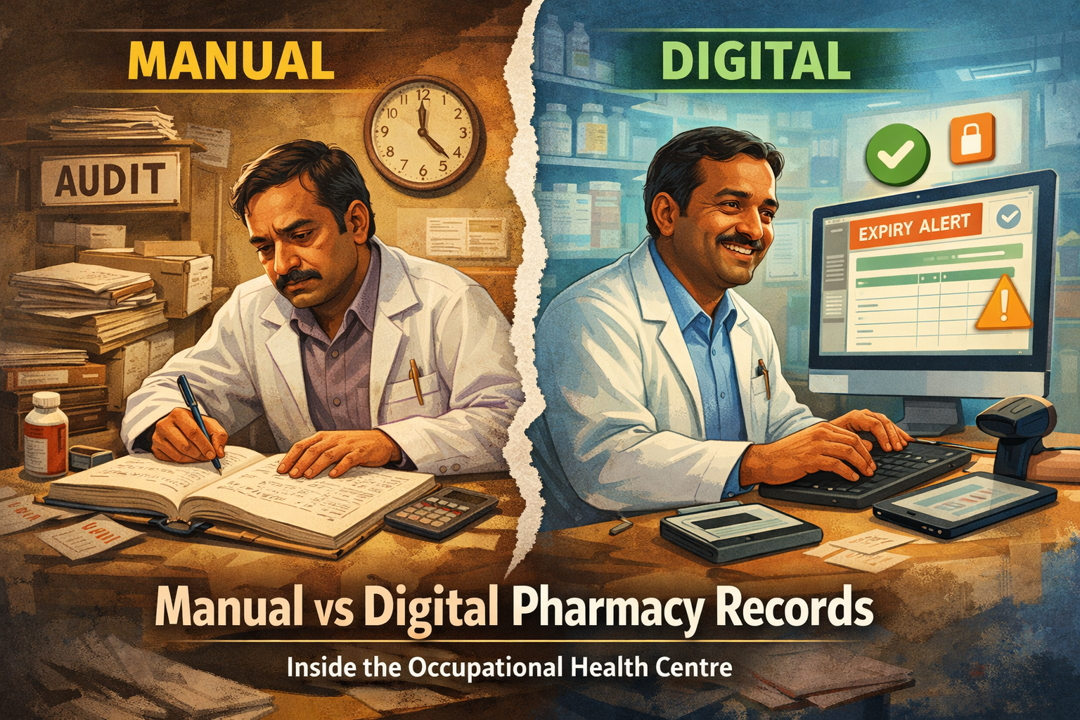
Modern Indian factories are shifting from registers to digital OHC systems.
Benefits of Digital OHC Management
✔ Paperless medical records
✔ Automatic audit reports
✔ Medicine stock alerts
✔ Health trend analytics
✔ Faster compliance proof
Common Tools Used:
- Cloud-based OHC software
- Excel + secure drives (basic level)
- HRMS integrated medical modules
Step 6: Regular Health Surveillance Programs
OHCs must conduct:
Mandatory Periodic Medical Examinations (PME)
| Exposure | Required Tests |
|---|---|
| Dust | Lung function test |
| Noise | Audiometry |
| Chemicals | Blood/urine tests |
| Heat | BP & hydration |
| Ergonomic | Musculoskeletal assessment |
Step 7: Emergency Preparedness & Mock Drills
Every OHC should coordinate with:
- Fire team
- Safety department
- Ambulance services
- Nearby hospitals
Quarterly drills should cover:
🔥 Burns
⚡ Electric shock
🏗 Trauma injuries
☣ Chemical exposure
Step 8: OHC Performance Monitoring
Track:
- Injury frequency rate
- Medicine consumption
- Sick leave trends
- Occupational disease cases
- Emergency response time
These metrics are crucial for:
✔ Management reviews
✔ Safety audits
✔ Insurance negotiations
Best Practices from High-Performing Indian Plants
🏭 Steel Plant (Chhattisgarh)
- Digital medical files
- Dedicated emergency ambulance
- Daily toolbox health talks
🧪 Chemical Factory (Gujarat)
- Exposure monitoring
- Real-time gas sensors linked to OHC
🚚 Logistics Hub (Maharashtra)
- 24×7 nurse shift
- Fatigue management program
Common Compliance Mistakes to Avoid
❌ No trained pharmacist
❌ Expired medicines
❌ Missing accident records
❌ Poor waste management
❌ No emergency SOPs
❌ Incomplete PME
Practical Implementation Roadmap
Phase 1 – Planning (Month 1)
✔ Legal requirements mapping
✔ Layout finalization
✔ Budget approval
Phase 2 – Setup (Month 2)
✔ Infrastructure
✔ Equipment purchase
✔ Staffing
Phase 3 – Operations (Month 3 onwards)
✔ SOP rollout
✔ Digital records
✔ Health programs
Final Thoughts: OHCs Are Strategic Assets, Not Cost Centres
An Occupational Health Centre done right:
✅ Saves lives
✅ Reduces legal risk
✅ Improves morale
✅ Enhances productivity
✅ Strengthens company reputation
In today’s compliance-driven industrial ecosystem, OHC excellence separates responsible companies from risky ones.