Modern industries are rapidly adopting digital solutions to improve operational efficiency, compliance, and employee well-being. One area that has seen significant transformation is occupational healthcare management. Traditionally, Occupational Health Centres (OHCs) relied heavily on manual documentation, physical registers, and paper-based medical records. However, with increasing workforce size, regulatory requirements, and the need for data-driven health management, manual systems are no longer sufficient.
This is where the Digital OHC System (Digital Occupational Health Centre System) plays a vital role.
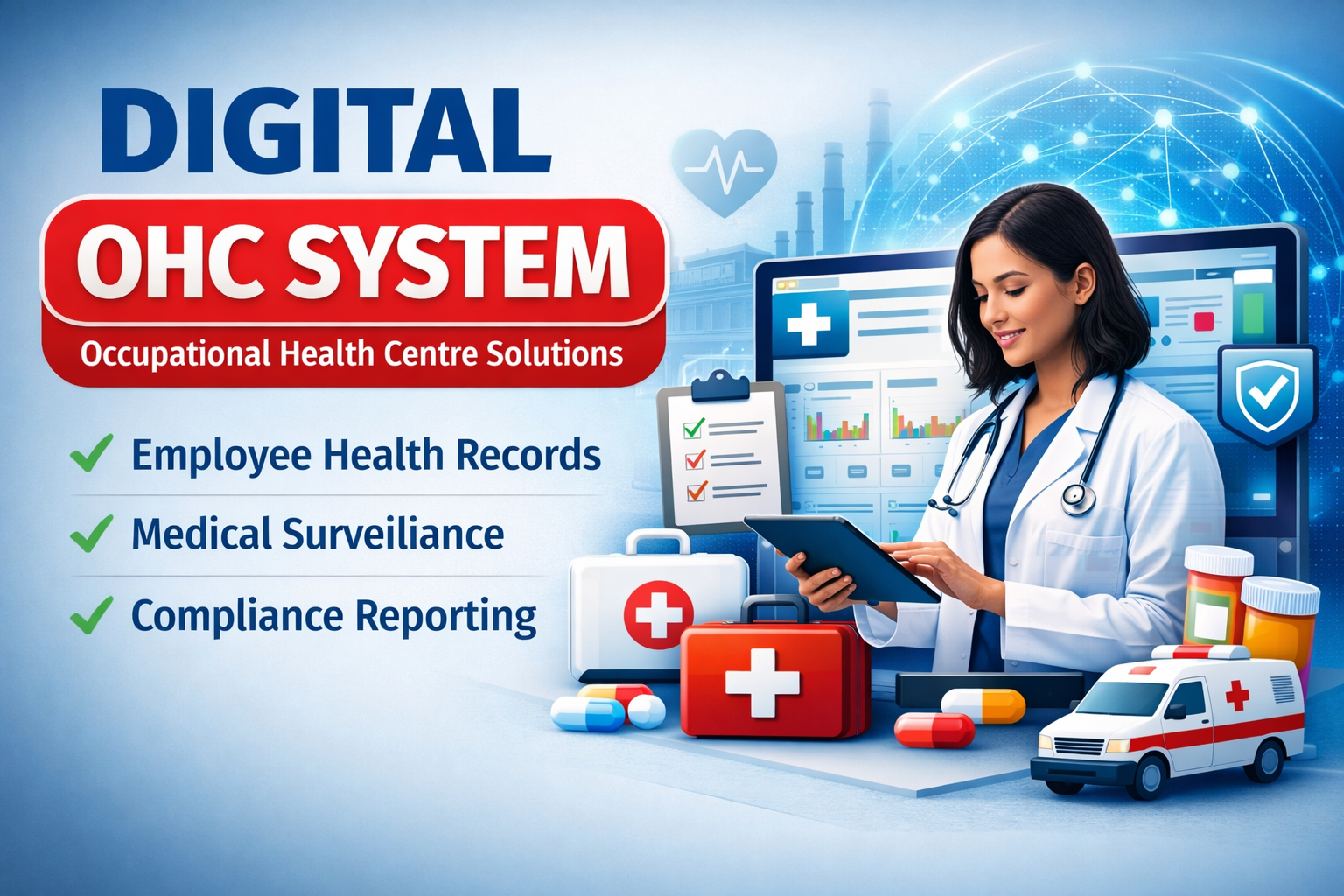
A Digital OHC System helps organizations manage workplace health services, employee medical records, pharmacy operations, medical surveillance, and regulatory compliance using a centralized digital platform. It transforms traditional occupational healthcare operations into a modern, efficient, and data-driven system.
In this comprehensive guide, we will explore everything about Digital OHC Systems, including their components, features, benefits, technologies, implementation strategies, and the future of digital occupational healthcare.
Understanding Occupational Health Centres (OHC)
Before exploring the digital system, it is important to understand what an Occupational Health Centre (OHC) is.
An Occupational Health Centre is a medical facility established within industrial workplaces to provide healthcare services to employees. Many industries such as manufacturing plants, mining operations, chemical industries, construction companies, and large corporate campuses operate OHCs to ensure the health and safety of their workforce.
The primary objectives of an Occupational Health Centre include:
- Providing first aid and emergency medical care
- Monitoring occupational health risks
- Conducting periodic medical examinations
- Managing workplace injuries and illnesses
- Maintaining employee medical records
- Promoting workplace wellness programs
- Ensuring compliance with occupational health regulations
In many countries, labor laws and industrial safety regulations mandate the establishment of OHC facilities for large industrial workplaces.
Despite the importance of OHCs, many organizations still operate them using manual systems, which can create several operational challenges.
Limitations of Traditional OHC Management
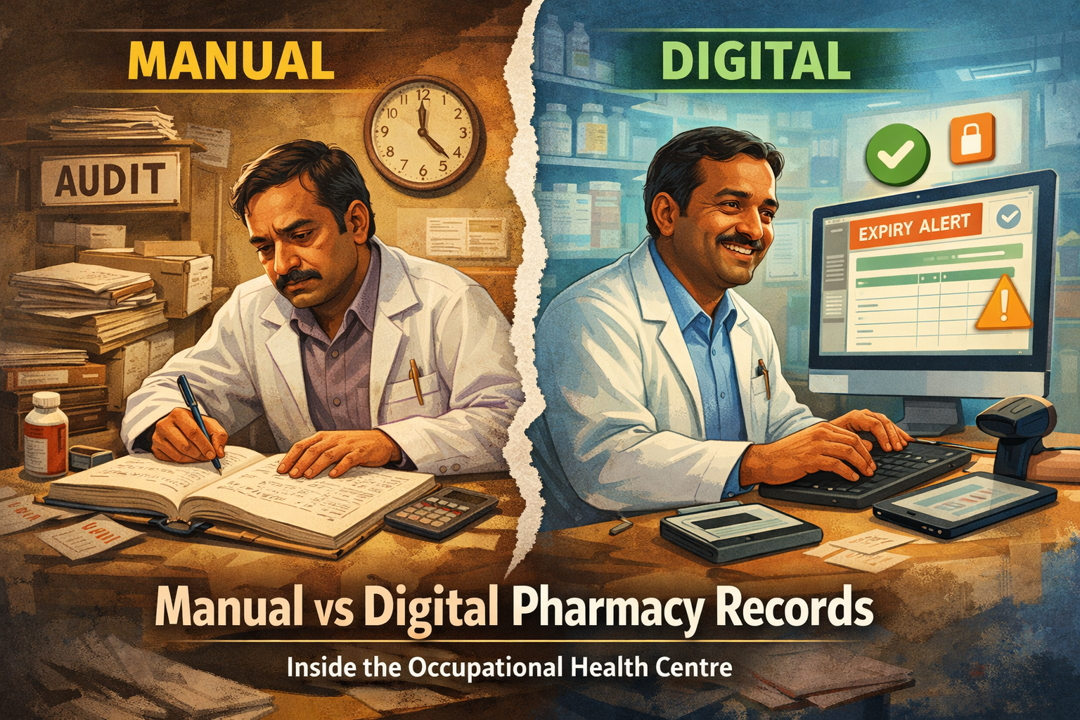
Traditional OHC operations often depend on physical registers, handwritten prescriptions, and paper files. While this approach may work for small setups, it becomes inefficient and difficult to manage in large organizations with thousands of employees.
Some common limitations of traditional OHC management include:
Difficulty in Managing Medical Records
Manual record keeping requires maintaining large physical files. Retrieving employee health data during emergencies or medical consultations can be time-consuming.
Risk of Data Loss
Paper records are vulnerable to damage, misplacement, or loss due to accidents, poor storage, or human error.
Inefficient Reporting
Generating health reports for audits, compliance inspections, or management analysis requires manual data compilation, which consumes significant time and effort.
Inventory Management Challenges
Tracking medicine stock, expiry dates, and purchase records manually often leads to stock shortages or wastage due to expired medicines.
Lack of Health Analytics
Manual systems cannot easily analyze health trends, disease patterns, or accident statistics, limiting the ability of organizations to implement proactive health measures.
To overcome these challenges, organizations are increasingly adopting Digital OHC Systems.
What is a Digital OHC System?
A Digital OHC System is a software-based platform designed to digitize the entire workflow of an Occupational Health Centre.
It allows healthcare professionals and administrators to manage all OHC activities digitally, including employee health records, consultations, pharmacy operations, medical examinations, incident reporting, and regulatory documentation.
The system typically operates through a web-based or cloud-based application, enabling authorized users to access medical data securely from computers, tablets, or mobile devices.
In simple terms, a Digital OHC System converts a traditional paper-based Occupational Health Centre into a smart, automated healthcare management platform.
Core Modules of a Digital OHC System
A complete Digital OHC platform consists of multiple integrated modules designed to handle different aspects of occupational healthcare.
Employee Health Record Management
One of the most important components of a Digital OHC System is the Electronic Employee Health Record (EHR) module.
This module stores detailed health information for every employee, including:
- Personal and demographic details
- Medical history
- Allergies and chronic conditions
- Consultation records
- Laboratory reports
- Medical fitness certificates
- Occupational exposure records
Digital health records ensure that medical history is available instantly during consultations or emergencies.
OPD Consultation Management
The OPD consultation module helps doctors and medical staff record consultation details digitally.
Typical features include:
- Employee registration
- Doctor consultation notes
- Diagnosis documentation
- Treatment plans
- Digital prescriptions
- Follow-up reminders
Digital consultation records improve documentation accuracy and ensure continuity of care.
Occupational Health Surveillance
Industries often expose workers to hazardous substances, noise, dust, chemicals, or radiation. Monitoring employee health in such environments is critical.
The health surveillance module manages:
- Pre-employment medical examinations
- Periodic medical examinations
- Special medical examinations
- Acrophobia examinations
- Biological monitoring tests
- Occupational disease tracking
These records help organizations comply with industrial health regulations and identify early signs of occupational illnesses.
Pharmacy and Medicine Inventory Management
Most Occupational Health Centres operate a pharmacy or medicine dispensing unit.
The Digital OHC System includes a pharmacy module that manages:
- Medicine inventory
- Batch numbers
- Expiry date tracking
- Stock alerts
- Purchase records
- Medicine dispensing history
Automated alerts ensure timely procurement and reduce medicine wastage.
Accident and Incident Management
Workplace accidents and injuries must be documented properly for safety monitoring and legal compliance.
A Digital OHC System helps record:
- Accident details
- Injury type and severity
- First aid provided
- Hospital referrals
- Root cause analysis
- Corrective actions
- This data helps organizations improve safety measures and prevent future incidents.
Health Camp and Medical Checkup Management
Many organizations conduct annual or periodic health checkups for employees.
Digital OHC systems manage:
- Health checkup scheduling
- Diagnostic test records
- Medical evaluation results
- Fitness certification
- Health risk assessments
This module helps track employee health trends over time.
Compliance and Audit Reporting
Regulatory compliance is a major responsibility for occupational healthcare facilities.
A Digital OHC System generates reports required for:
- Safety audits
- Labor inspections
- Industrial health compliance
- Medical surveillance records
- Occupational disease monitoring
Automated reporting simplifies regulatory compliance and reduces administrative workload.
Analytics and Health Dashboard
Advanced Digital OHC systems provide dashboards and analytics tools.
These dashboards allow management to monitor:
- Health trends across departments
- Occupational disease patterns
- Accident statistics
- Medicine consumption
- Employee wellness indicators
Data-driven insights help organizations make informed decisions regarding workplace health policies.
Key Features of a Digital OHC System
Modern Digital OHC platforms include several advanced features designed to enhance efficiency and usability.
Some key features include:
- Electronic medical records
- Digital prescription management
- Automated medicine inventory tracking
- Employee health surveillance
- Emergency case management
- Health analytics dashboards
- Mobile accessibility
- Cloud data storage
- Secure role-based access
- Integration with hospital systems
These features make Digital OHC systems highly efficient for managing workplace healthcare services.
Benefits of Implementing a Digital OHC System
Adopting a Digital OHC System offers several advantages for organizations, healthcare professionals, and employees.
Improved Efficiency
Digital systems automate many administrative tasks such as documentation, reporting, and inventory tracking, allowing medical staff to focus more on patient care.
Better Data Accessibility
Employee medical records can be accessed instantly, improving consultation efficiency and emergency response.
Reduced Paperwork
Digital documentation eliminates the need for bulky files and registers, saving storage space and administrative effort.
Enhanced Compliance Management
Automated reports help organizations comply with occupational health regulations and safety audits.
Accurate Data Management
Digital systems reduce errors associated with manual record keeping and improve data accuracy.
Proactive Health Monitoring
Analytics tools allow organizations to identify health risks and implement preventive measures.
Faster Emergency Response
Access to digital medical history enables doctors to provide faster and safer treatment during emergencies.
Industries That Use Digital OHC Systems
Digital Occupational Health Centre systems are widely used across industries that employ large workforces.
Common sectors include:
- Manufacturing industries
- Mining companies
- Oil and gas industries
- Chemical and pharmaceutical plants
- Construction companies
- Power generation plants
- Logistics and transportation companies
- Large corporate offices and IT parks
These industries require efficient occupational health management to ensure employee safety and regulatory compliance.
Technologies Powering Digital OHC Systems
Modern Digital OHC platforms are built using advanced digital technologies.
Some key technologies include:
Cloud Computing
Cloud-based systems allow secure access to medical data from multiple locations while reducing infrastructure costs.
Electronic Medical Records (EMR)
EMR technology ensures structured digital storage of employee health records.
Artificial Intelligence (AI)
AI can analyze health data to identify disease trends and predict potential health risks.
Internet of Things (IoT)
Wearable devices and health monitoring sensors can integrate with Digital OHC systems to track employee health metrics.
Data Analytics
Advanced analytics tools help organizations evaluate health patterns and workplace risk factors.
Steps to Implement a Digital OHC System
Successful implementation of a Digital OHC System requires proper planning.
Step 1: Assess Organizational Needs
Evaluate current OHC operations and identify areas that require digital transformation.
Step 2: Select the Right Software Platform
Choose a Digital OHC solution that offers required features such as health records management, pharmacy modules, and compliance reporting.
Step 3: Digitize Existing Medical Records
Existing employee medical records should be digitized and uploaded into the system.
Step 4: Train Medical Staff
Doctors, pharmacists, and administrators should be trained to use the system effectively.
Step 5: Implement Data Security Measures
Ensure that the system includes proper data encryption, access control, and privacy protection.
Step 6: Monitor and Optimize
Regularly evaluate system performance and update processes to improve efficiency.
Challenges in Implementing Digital OHC Systems
While Digital OHC Systems offer many advantages, organizations may face some challenges during implementation.
Common challenges include:
- Initial investment costs
- Staff resistance to technology adoption
- Data migration complexity
- Integration with existing hospital systems
- Data security concerns
These challenges can be addressed through proper planning, training, and technology support.
The Future of Digital Occupational Healthcare
The future of occupational healthcare is becoming increasingly digital and predictive.
Emerging trends include:
- AI-based occupational disease prediction
- Remote health monitoring using wearable devices
- Telemedicine services for industrial workers
- Predictive safety analytics
- Integration with workplace safety systems
These innovations will help organizations shift from reactive healthcare management to preventive and predictive occupational health strategies.
Why Digital OHC Systems are the Future of Workplace Healthcare
Organizations today recognize that employee health directly impacts productivity, workplace safety, and overall business performance.
Digital OHC systems enable organizations to:
- Maintain comprehensive employee health data
- Identify workplace health risks early
- Improve regulatory compliance
- Optimize healthcare resource utilization
- Promote employee wellness programs
As industries continue to embrace digital transformation, Digital OHC Systems will become a fundamental component of workplace healthcare management.
Conclusion
A Digital OHC System represents a major advancement in occupational healthcare management. By digitizing medical records, pharmacy operations, health surveillance, and compliance documentation, organizations can significantly improve efficiency, accuracy, and employee health monitoring.
Traditional paper-based systems are no longer sufficient for modern industries that require real-time health data, automated reporting, and proactive health management.
Implementing a Digital OHC System not only streamlines Occupational Health Centre operations but also helps organizations create a healthier, safer, and more productive workforce.
As technology continues to evolve, Digital OHC platforms will play a crucial role in shaping the future of workplace healthcare.